The Hall of Records × The Craft Desk · The Protocols Editor's Pick
The Protocols: Max Martin's Vocal Architecture
Crisp presence, seamless pitch, no sibilant clutter, enormous width — the modern pop vocal is not a plugin chain, it's a protocol executed in a fixed order. Here is that architecture, stage by stage, and what a working producer can actually run tomorrow.


The modern pop vocal has a sound so consistent across artists, labels, and decades that most producers assume it’s a secret plugin. It isn’t. It’s a protocol — a repeatable multi-stage architecture, executed in a strict order, where each stage exists to make the next one possible. The Max Martin school is its clearest expression, and the architecture is documented well enough to study: tracking front-end, surgical editing, a two-tier tuning engine, the mix chain, and the spatial layer.
What follows is the shape of that system — with the important honesty up front: specific settings are starting points, not sacred numbers. The value here is the order of operations and the reasoning behind each stage. Copy the sequence; tune the values to your voice, your room, your song.
Stage one: the front end
A bright, hyper-detailed condenser (the Sony C800G is the school’s signature) or a vintage-warm alternative (U47/U87 lineage) when a singer needs mid-range body rather than more air. Into a Neve-style preamp with a high-pass engaged low, then a gentle optical or tube compressor catching only a couple of decibels on peaks. The principle beneath the gear: capture stage isn’t the shaping stage — you’re protecting signal-to-noise and taming peaks, nothing more. Every aggressive decision made here is a decision you cannot unmake later.
Stage two: surgical editing — the stage everybody skips
This is where the school’s sound actually lives, and it’s not a plugin at all.
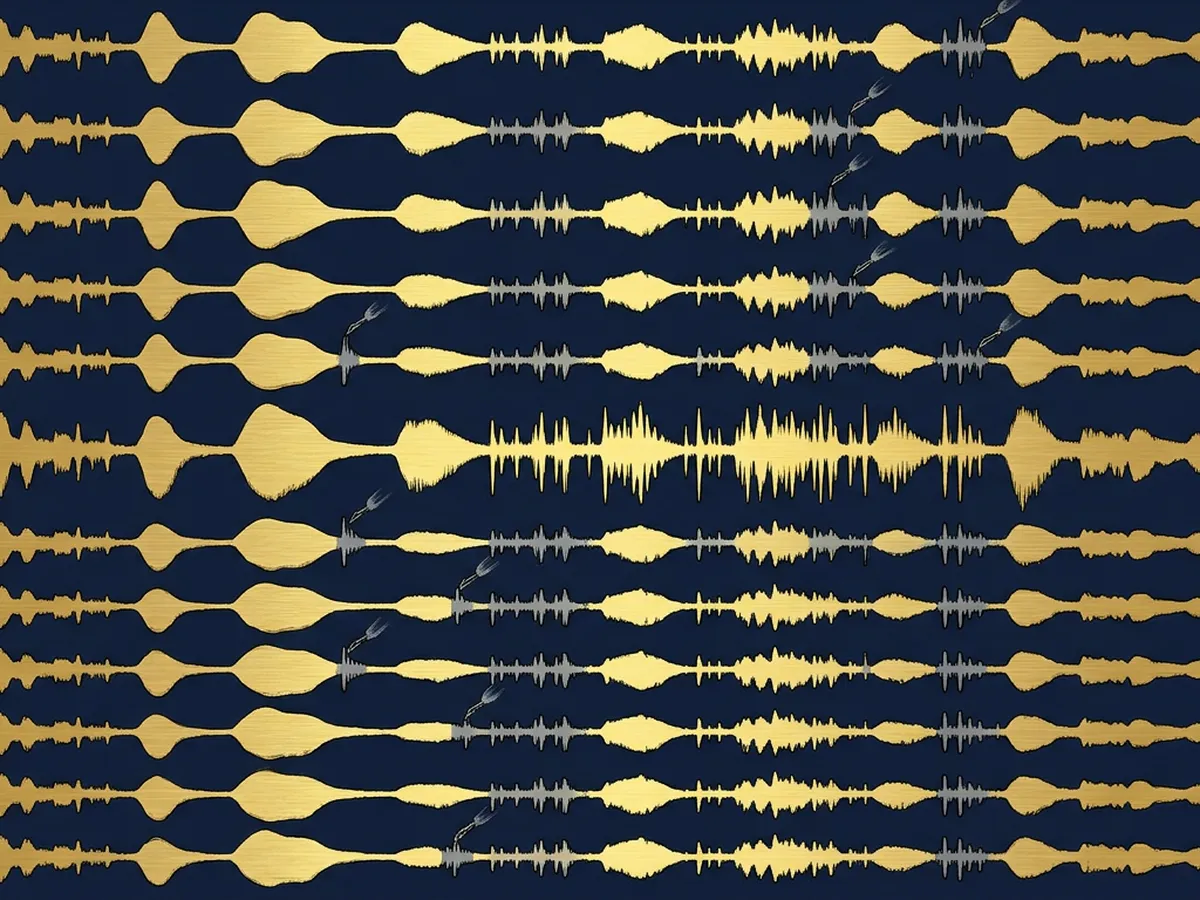
De-sibilance by hand, on the stacks. In a dense chorus stack — lead, octave doubles, third and fifth harmonies — every sibilant consonant (“s,” “t,” “ch,” “k”) is manually cut or gain-reduced to near-nothing on every background track. Only the center lead is permitted to carry sibilant transients. The reason is physics, not taste: twenty singers pronounce an “s” microseconds apart, and those staggered transients phase-smear into the slashing, harsh top-end that makes amateur stacks sound like a hiss cloud. Remove the duplicates and the stack becomes glass.
Breaths, handled deliberately. Deleted entirely on backgrounds; on the lead, separated onto their own clips and attenuated — intimacy preserved, downstream compressors not triggered by air.
What to steal, even if you never do anything else on this page: this stage costs no money and transforms stacked vocals more than any plugin purchase available to you.
Stage three: the two-tier tuning engine
The school’s tuning is two processes, and running only one is why most tuned vocals sound wrong.
Tier one — graphic, manual correction (Melodyne-class): note by note, pitch drift flattened while natural attack transitions are preserved, formants nudged individually when a note sounds pinched. This is where musicality is protected.
Tier two — the snap engine (Auto-Tune-class, fast retune): applied after manual correction, so it’s not fixing anything — it’s an aesthetic, locking notes to the grid with that recognizable modern sheen, without the glitching that happens when a snap engine is asked to do macro-repair work.
Then alignment: doubles and harmonies timed to the lead — VocALign-class or manual clip-stretching — until the stack reads as one enormous voice rather than a crowd. The lesson: tuning is repair then effect, in that order. Reverse them and you get artifacts; skip the first and you get the sound every producer complains about.
Stage four: the mix chain
High-pass below the voice; a narrow cut in the low-mids where proximity boxiness lives; a smooth high shelf for air. Then serial compression, two units with two jobs: a fast FET-style unit catching only the sharpest transient spikes, followed by a slower optical-style unit doing gentle continuous leveling. Two moderate stages beat one aggressive stage — this is the school’s most transferable mix idea and the reason these vocals sit forward without sounding crushed.
Stage five: the spatial layer
Width without mono damage: a micro-pitch shifter detuning a handful of cents in opposite directions across the stereo field with a small delay offset, creating a wide anchor behind the center lead. Depth without mud: reverbs and delays sidechained to the lead so tails duck while the singer is singing and bloom in the gaps between phrases. The result is the modern paradox — a vocal that sounds simultaneously dry, present, and enormous — and it’s engineered entirely by timing, not by more processing. (The full mechanics of ducked space are their own teardown: Ducked Space →.)
The honest counterpoint
Two, actually. First: this architecture serves a specific aesthetic. It’s built for maximum-clarity modern pop, and applying it to a folk record, a live jazz date, or an intimate singer-songwriter ballad would strip exactly the humanity those records are made of — the school’s own principle, servant of the song, argues against its own indiscriminate use. Second: the gear names are the least important part of this page. The C800G and the Neve are the school’s tools, not the school’s ideas; the ideas are order-of-operations, hand editing before processing, repair before effect, two moderate stages over one aggressive one. Those run on whatever you own. That’s why this is a protocol and not a shopping list.
The Protocols: Ducked Space: Reverb & Delay Throws → · The Hall: The Pantheon → · The Craft Desk: Your First Vocal Chain →