Provenance & IP · The IP Matrix · The Bionic Virtuoso Editor's Pick
The Bionic Virtuoso: The Only Watermark-Proof Workflow in Modern Music
Machine speed in pre-production, human hands on every sound in the master. The summit tier of the IP Matrix is the one workflow that owns everything, wears no label, and cannot be fingerprinted — because there is nothing synthetic left to find.

I. The claim
The Bionic Virtuoso is Tier 7 of the IP Matrix — the absolute summit. In this workflow, generative AI operates exclusively as a pre-production instrument, and every single sound that survives into the final master is performed, played, sung, or programmed by a human being.
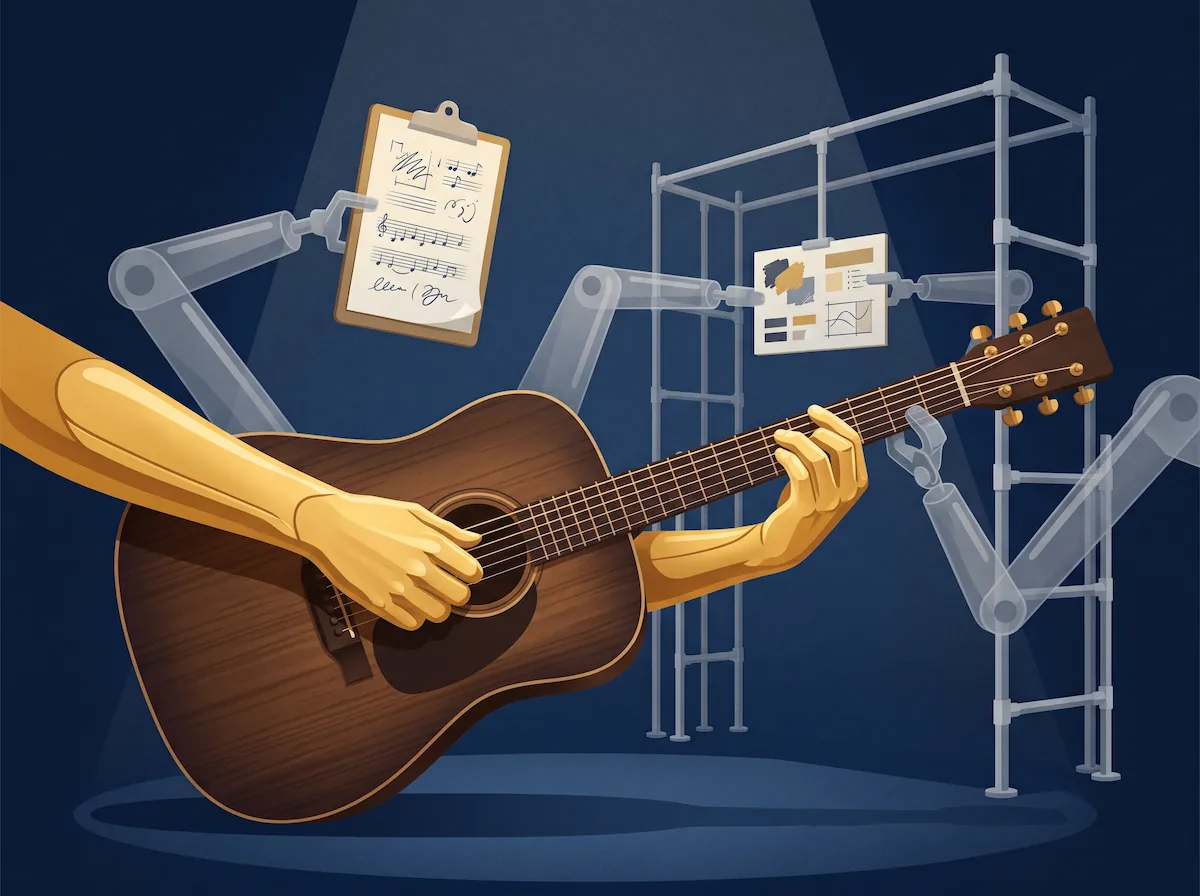
The machine can sketch, suggest, arrange, and accelerate. It can generate a hundred references and compress weeks of exploration into a single afternoon. But at the moment of the record, the machine’s audio is fully replaced — re-performed. The final deliverable contains zero generated audio.
The consequences of this discipline follow like dominoes:
Total ownership. Because every element in the master is human-performed and human-authored, the copyright claim covers the entire work — 100% of the composition and the sound recording. No carve-outs, no disclosed machine shares, no asterisks. This is the only tier where the answer to “what do you own?” is simply: all of it.
Unrestricted distribution. The distribution doctrine that caps lower tiers — surviving AI stems triggering social-only limits or platform AI labels — has nothing to attach to. A Bionic record streams everywhere, unlabeled, because the condition that triggers the flag doesn’t exist in the file.
Immune to detection. Watermarks and fingerprints identify generated audio inside the audio. A Bionic master contains none. Nothing for an ingestion scanner to flag; nothing for a suspicion-based policy to find. Every other tier’s relationship with detection is a negotiation. The Bionic Virtuoso’s is irrelevance. When platforms announce durable watermarking, the Ghosts hear enforcement. The Architects hear certification.
II. The method: building the Bionic master
The Bionic workflow is not AI abstinence — that’s a misreading of the entire market. The Virtuoso uses the machine harder than the Ghost does: rapid ideation, structural experiments, reference material that used to burn months of studio time. The discipline is a single, bright line: generated audio is scaffolding, and the scaffolding comes down before the building opens.
- The vocal: the machine sketched the melody? You re-sing it — through a Sennheiser e935 into a used Apogee Duet 2, a chain that costs less than most beginners’ plastic bundles and outperforms them all.
- The groove: the AI generated a drum feel? You play it live or re-program it meticulously by hand.
- The pocket: the reference had a monster bassline? You pull the stem out and re-track it on a modified Squier — Seymour Duncans and upgraded wiring, sounding like a custom-shop instrument on the recording.
- The mix: human ears make the final calls, on ATH-M50x closed-backs (or M30x if the budget’s tight) — the truth, without the untreated-room lies.
The entire rig is the Sovereign Studio Standard: professional workhorse gear, most of it used, all of it holding value — because the entry fee for the summit tier is real hands, not an expensive room. The machine’s fingerprints end exactly where the master begins.
III. The architecture, in depth: one record through the Bionic pipeline — a working masterclass
(The Editor’s Pick depth standard in action: the complete workflow at paid-course depth, phase by phase, following a single record from prompt to provable master. The tools are interchangeable; the architecture is the method.)
| Phase | Core action | The human ownership move | Provenance artifact |
|---|---|---|---|
| 1 · Generative pre-production | Rapid ideation, structural prompts | Auditioning possibilities, judging nothing | Raw AI sketches → the Machine Log |
| 2 · Transcription layer | Charting chords, intervals, rhythm | Understanding and editing the ideas | Performance charts, lead sheets |
| 3 · Re-performance | Human tracking over the sketches | Re-singing, re-playing, re-programming | Raw multitracks, dated session saves |
| 4 · Verification pass | Solo every track | Removing hidden generated survivors | The audited session log |
| 5 · Master + dossier | Final mix, master, release prep | Assembling the chain of title | Master + complete Provenance Dossier → |
Phase one — generative pre-production, at full throttle. This is where the misreading dies: the Bionic session opens with the machine, aggressively. Generate whole arrangements to interrogate a song’s possibilities — six structures in an hour instead of six days. Generate reference vocals to test whether the second verse melody actually lifts. Generate that monster bassline against your chorus to hear if the pocket you’re imagining exists. The machine’s role here has an exact name from the Hall’s oldest wing →: it is the sketch orchestra — Zimmer auditioning a score’s DNA in suite form before a note is tracked, at bedroom scale. Work fast, save everything, judge nothing yet. The phase’s law: the machine proposes; nothing it proposes is precious, because none of it will survive.

Phase two — the transcription layer, where listening becomes authorship. Before anything gets re-performed, it gets understood — and this unglamorous middle phase is where the Bionic method quietly earns its ownership. Pull the keeper sketches apart: chart the chords the generator implied, notate the melody’s actual intervals, map the drum feel’s accents against the grid, velocity by velocity, name what the bassline is doing rhythmically that makes it work. Two things happen in this analysis. Practically, you build the performance documents real musicians work from. Legally and creatively, something more important: the moment you can articulate why the sketch works, the musical ideas have passed through human judgment into human command — you are no longer copying a generation, you are arranging a composition you now understand better than the machine that suggested it. Change what deserves changing here; the sketch was a draft, and you are now its editor with full authority.
Phase three — re-performance, the bright line crossed. Now the discipline the tier is named for: every surviving musical idea gets re-created by human hands, and the generated audio that carried it gets retired. The vocal re-sung — phrasing yours, breath yours, the melody now interpreted, not mimicked. The groove re-played or re-programmed hit by hit, your feel replacing the machine’s statistical average. The bassline re-tracked on your actual instrument through your actual chain. Order matters less than completeness — but a working sequence: rhythm section first (so everything after is performed to human time), harmonic beds second, lead vocal last and best (per the vocal chain’s doctrine →, when the emotional intent is undeniable the chain practically mixes itself). And one procedural law with teeth: retire, don’t delete. (Where extracted or separated audio is involved at all, the stem-separation ceiling → applies.) Generated scaffolding moves to the Machine Log →, never the trash — the evidence that it existed and was replaced is half your proof.
Phase four — the verification pass. Before mixing, the audit the Synthesist learned the hard way →: solo every track in the session and ask one question — did human hands make this sound? The session log answers from the record, not memory. Special attention to the sneaky survivors: the generated pad buried under three synths “just for glue,” the machine backing vocal tucked at −20, the transition riser from the original sketch. At the Synthesist tier those are disclosed passengers; at this tier they are failures of completeness. This pass takes minutes, and it is the difference between claiming the top row of the distribution table → and occupying it.
Phase five — the master and its dossier, shipped together. Mix and master as the record deserves — and assemble what the workflow has been generating all along: the session versions showing sketch-to-performance evolution, the raw takes with their beautiful imperfections, the Machine Log documenting every generation and its human replacement, the timeline of who played what, when. The Bionic master ships with its Provenance Dossier → the way it ships with its artwork — a standard deliverable. Run the stack: nothing for the watermark scanners to find, an honest “no surviving generated audio” at the distributor gate, no label at the DSP layer, full sync eligibility with the dossier as the closing asset. Every column open — not as a loophole, but as the documented truth about what is actually in the file.
What to steal, even if you never run the full protocol: phase two alone — transcribing and understanding any reference before using it — upgrades every producer at every tier; the retire-don’t-delete rule costs nothing and builds evidence at any tier that touches generation; and the phase-four solo audit is sixty seconds that every release, Bionic or not, deserves before upload.
And the honest counterpoint — because the standard requires it: this is the most expensive workflow in the Matrix, and for some records it is the wrong buy. A disposable content experiment doesn’t need five phases; a Synthesist release wearing its label honestly on social platforms is a legitimate strategy the doctrine itself blesses. The counterpoint has a limit, though, and it’s the one this page exists to teach: the cost of Bionic is paid once, at creation — the cost of not Bionic is paid every time the record hits a gate, a scan, a licensor, or a valuation, for the life of the catalog. Cheap tiers are rational for temporary assets. There are no cheap tiers for permanent ones.
IV. “But isn’t this just doing it the hard way?”
Before the case studies, the objection that stops most producers at the door — because it is a reasonable objection and it deserves a real answer rather than a slogan.
The argument goes: if the machine can produce a usable part in four seconds, and I spend three hours re-performing it, I have spent three hours to arrive at the same place. That isn’t discipline. That’s superstition.
Three answers, in ascending order of importance.
The first answer is that you don’t arrive at the same place. Not sonically. Re-performance is never transcription — it is interpretation, and the differences are the record. Your phrasing sits differently against the beat. Your hand pushes the second chorus harder than the first because you know what the lyric costs. The machine’s version is a statistical average of everything it learned; yours is a specific human decision at a specific moment. In a market where competent audio is free, that specificity is the entire remaining product. You are not re-creating the sketch. You are replacing an average with an argument.
The second answer is that the three hours were going to be spent anyway — later, worse, and under pressure. The producer who keeps generated audio in the master spends that time at the distributor gate, in the disclosure fields, in the appeal, in the sync negotiation that dies quietly, in the moment a buyer’s diligence asks what’s actually in the file. The cost isn’t eliminated by skipping the re-performance. It’s deferred, and it accrues interest — as the distribution doctrine’s ledger shows →.
The third answer is the one that matters most, and it isn’t about money. The reason to re-perform is that the alternative is a career of assembling things instead of making them. Every hour of re-performance is an hour of playing — and playing is the thing that made you capable enough to have this problem in the first place. A producer who outsources performance to the machine for five years does not emerge as a producer with five years of experience. They emerge as an assembler with a five-year gap, in a market that has stopped paying for assembly.
The honest limit of all three answers: this reasoning applies to work you intend to own and keep. It does not apply to a social clip, a mood board, a pitch demo, or a client’s disposable brief. The Matrix is a decision framework, not a religion → — and a producer who runs Tier 7 on everything is wasting their most expensive resource on work that doesn’t need it.

V. Three records through the pipeline
The architecture above is the shape. Here is what it looks like when a real song moves through it — three different starting points, three different amounts of machine involvement, one destination.
Record one: the machine wrote a better chorus than you did
You have a verse you love and a chorus that doesn’t lift. The machine, prompted with your verse, returns something that does — a melodic shape you would not have found, sitting over changes you wouldn’t have chosen.
This is the hardest case, because the machine contributed composition, not just audio.
Phase two carries the weight here. You chart it. You name what it’s doing — where the leap is, why the third interval lands, how the rhythm plays against the verse. And then, having understood it, you change it, because the version that arrives out of understanding is yours in a way the copied version isn’t. Move the melodic peak. Re-harmonize underneath. Rewrite the rhythm of the syllables so it fits the singer you actually have.
Phase three: you sing it. Every note, your voice, your phrasing.
Where it lands: the sound recording is unambiguously yours. The composition question is honest and documented — the sketch’s role recorded in the Machine Log →, the transformation charted. This is the boundary case the Matrix’s session two → classifies in detail, and the honest position is that the tier is earned in phase two, not claimed at the bounce. If all you did was hum it back, you have a Maestro-tier composition question wearing a Bionic-tier recording.
Record two: the machine built the entire arrangement
A full generated backing track — drums, bass, keys, pads, the works — that captured exactly the feel you were chasing and would have taken you two weeks to program.
Phase two is a transcription job, and it is genuinely long: chart every part, map the drum feel’s accents, note the voicings, name the sounds. You will discover, doing this, that roughly a third of what the machine produced was doing nothing — texture that reads as fullness and functions as mud. That discovery is a large part of the value of phase two, and no producer who skips it ever finds it.
Phase three: you rebuild it. Programmed by hand, played where you can play, sampled from your own library where you can’t. The version you build is smaller than the machine’s and hits harder, because you removed what wasn’t working.
Where it lands: every column open. And the record is better than the sketch — which is the outcome the abstinence camp insists is impossible and the shortcut camp never gets to find out.
Record three: the machine was a search engine
You generated forty variations to answer a single question — should this song be at 92 or 104 BPM, in a minor key or a modal one, driven by guitar or by synth? You listened, you chose, you deleted everything.
Phases two through four barely apply, because nothing needs re-performing: no generated audio was ever going to reach the master. What you used the machine for was decision compression — running an experiment in an afternoon that used to take a month of demos.
Where it lands: Bionic, trivially. And here is why this record matters most for the working producer reading this: most of the real value of generative tools in a serious workflow looks like this. Not writing your parts. Answering your questions faster than the old process could. The producers who benefit most from these tools are frequently the ones whose finished records contain no trace of them at all.
VI. The cost accounting, honestly
The tier is expensive. Refusing to say so would be the kind of marketing this desk exists to avoid.
What it costs. Phase two — the transcription layer — is the real expense, and it is the phase producers skip when the deadline tightens. Expect it to take longer than the generation and the re-performance combined on any material of real complexity. Add the verification pass, add the dossier assembly, and a Bionic record carries meaningfully more hours than the same song built by keeping the sketch.
What it requires that money can’t buy. You have to be able to play, sing, or program what the sketch proposes. That is the tier’s actual gate, and it is not evenly distributed. A producer who cannot yet perform at the level of their own references has an honest choice: run a lower tier and disclose it, or spend the year getting better. Both are legitimate. Pretending the gate isn’t there is not.
What it pays. Every column of the distribution table → open. No label. No scan exposure. Full sync eligibility with the dossier as the closing asset. A catalog that can be sold, licensed, and defended without an asterisk. And the compounding one: the skills stay. The producer who re-performs for five years is measurably better at the end of them.
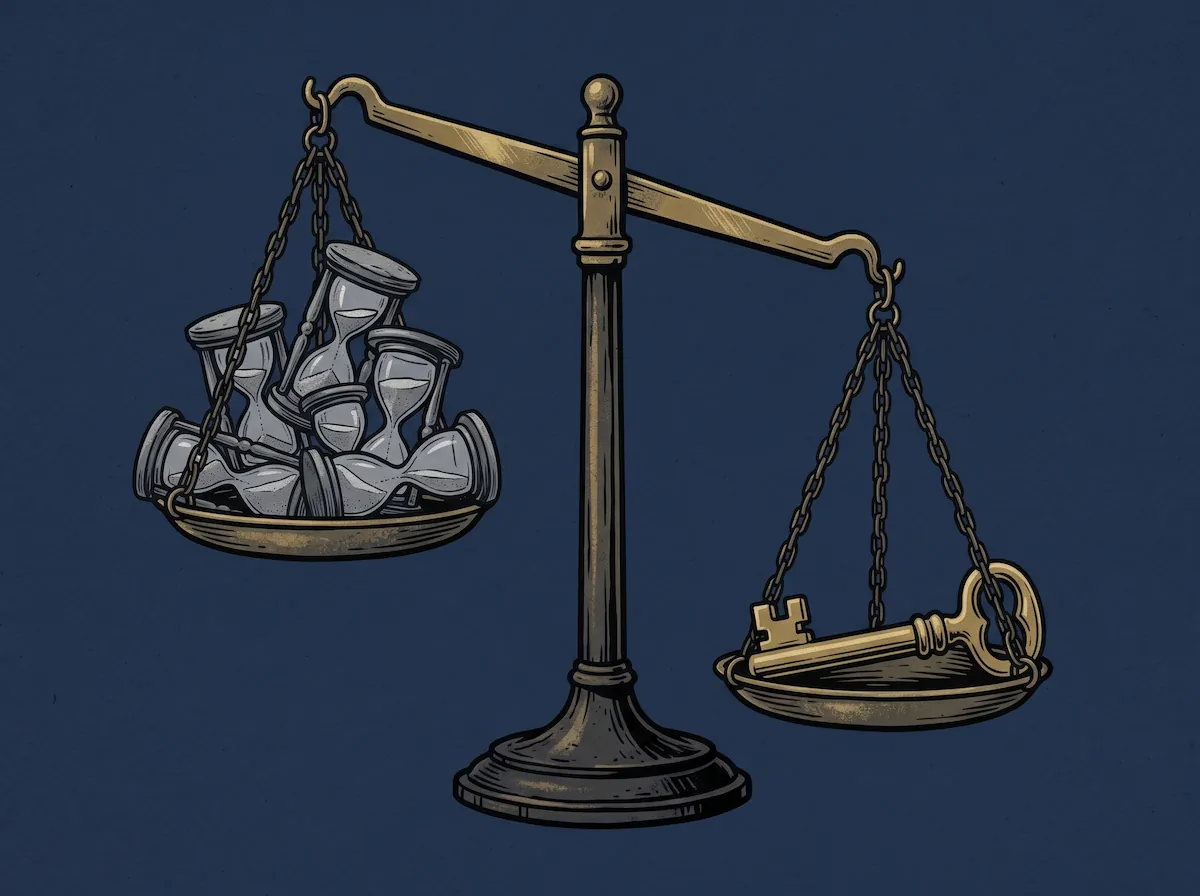
The break-even, stated plainly. For a disposable asset, Tier 7 never breaks even. For a permanent one, it breaks even the first time anyone asks a question — and everything after that is profit. The entire decision is therefore not “is this workflow worth it” but “is this record permanent?” Answer that first and the tier chooses itself.
The tier is called Bionic because the machine genuinely extends your capabilities. It is called Virtuoso because the protocol only closes if you can actually perform what the sketches propose.
That is the honest cost of Tier 7, and we disclose it the way we disclose every tier’s cost: it demands musicianship. It is the most expensive tier in skill and hours — and that is precisely why it is the most valuable. The cost is the moat. In an economy where competent audio is suddenly free, the unfakeable ingredient is the human performance.
And it is entirely provable. The re-performance process naturally generates the complete Provenance Dossier →: DAW sessions with modification history, raw takes, tracking logs, the documented moment each machine sketch was replaced by human hands. The Bionic Virtuoso doesn’t just own the empire — they can demonstrate ownership to any platform, licensor, or examiner who asks.
VIII. When to deploy the summit tier
Deploy Bionic when the record truly matters: flagship releases, sync-bound catalog, anything you intend to monetize for decades. Lower tiers remain rational for sketches, experiments, and disposable content — the Matrix is a decision framework, not a religion. The mistake is never using a lower tier; the mistake is building permanent assets on temporary ground.
The machine gave everyone speed. The summit of the Matrix is where speed and ownership stop being a trade-off.
Series: The IP Matrix: 7 Tiers → · Previous: The Synthesist → · Start: The Ghost →