The Dependence Tax: What Waiting on Collaborators Actually Costs a Songwriter
Every hand-off in your workflow has a price — in weeks, in fees, in translation loss, and ultimately in ownership. The honest accounting of dependence, and the uncompromising list of what is actually still worth paying for.

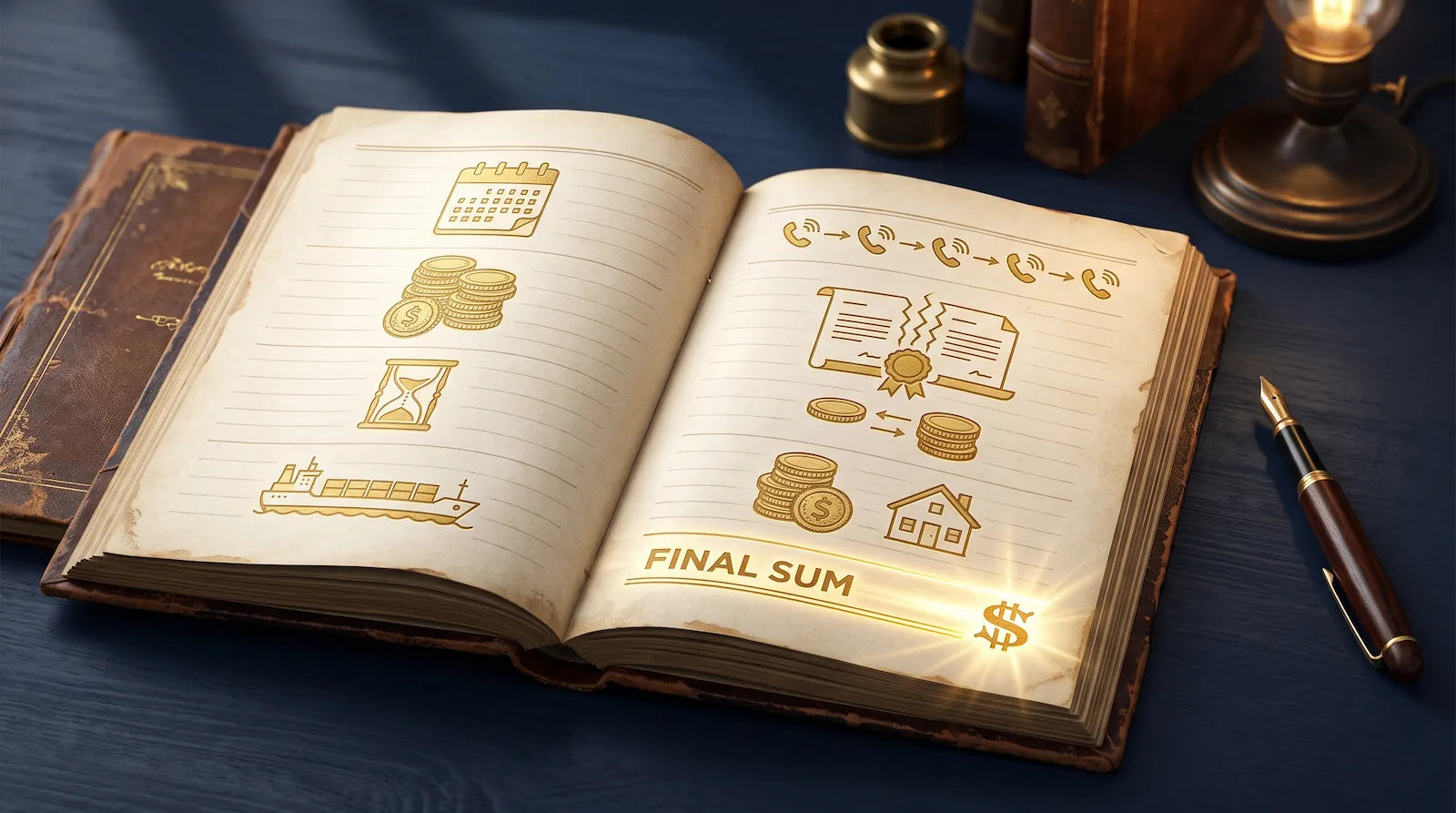
Every songwriter who cannot produce their own records pays a silent tax. It doesn’t appear as a line item on any royalty statement, which is exactly why the profession has under-counted it for decades — but it compounds like anything unexamined does, and the commoditization squeeze → just raised every single rate on the schedule.
Here is your itemized bill.
The four hidden taxes
Line one: the calendar tax. Your song is finished tonight; your collaborator’s calendar says two weeks. In a market where sync briefs close overnight and an artist’s attention window is measured in days, the real price of a hand-off is measured in expired opportunities. Speed is not a vanity metric in the modern pitch economy — it is your positioning, and dependence surrenders it by default.
Line two: the fee tax. Demo production, vocal tracking, rough mixing — billed per song, per pitch, forever. The arithmetic bears repeating because it’s the one equation every working writer can instantly verify from their own books: a recurring per-song cost versus a one-time education. The education doesn’t just pay for itself; it converts every future song from a liability expense into pure margin.
Line three: the translation tax. There is the version you heard in your head, and there is the version that came back in the bounce. Every hand-off passes your emotional intent through another person’s taste, assumptions, and available attention — and what survives is always a negotiation. Sometimes collaboration genuinely improves the song; that is collaboration’s honest case. But routine hand-offs of your own material — done simply because you lack the capability to execute it yourself — mean your catalog becomes a lifetime of approximations. You never get exactly what you heard.
Line four: the ownership tax — the quietest and most lethal. Casual production contributions mutate into split-sheet conversations. Hand-offs done quickly, without paperwork, become chain-of-title disputes years later — usually at the exact moment the song finally earns something worth fighting over. The writer who produces keeps the authorship question simple and the registration walkthrough → perfectly clean: one name, the whole record, zero reconstruction.
Picture the composite case — the one every working writer has either lived or watched from one desk over. Thursday night, a sync brief closing in four hours. The song is done. The vocal is magic. And the writer is waiting on a rough mix from a collaborator whose calendar rightfully prioritizes his own projects over someone else’s deadline. The track misses the window. Nobody did anything wrong — and the opportunity is just as gone. That night is when the lesson usually lands: technical self-sufficiency was never about saving demo fees. The ability to hit export yourself is the only raise nobody can deny you.

What is actually still worth paying for
An honest ledger always has a credit column, and the Second Craft is not a religion of isolation. Three outsources remain rational at almost any skill level:
- Mastering on flagship releases. An objective, elite second set of ears at the final gate is quality control, not dependence.
- Mixing, when the stakes demand it. Once you can confidently mix your own competitive demos, you occasionally hire a mix engineer for flagship records — but now you’re hiring elevation, not survival, and you finally possess the vocabulary to hear the exact difference you’re buying.
- Genuine creative collaboration. The co-writer, the featured virtuoso player — where the other person’s unique voice is the entire point of the session, not a workaround for a skill you lack.
The distinction that organizes the entire ledger: pay for perspectives; stop paying for capabilities. A perspective makes the work better than you could alone. A capability you rent forever is just a tax — renewed annually — on a decision you simply haven’t made yet.
The Second Craft is that decision. The Learning Order →.