The Great Squeeze: Why the Music Industry's Middle Class Is Disappearing
The music industry isn't dying — it's polarizing. Our founding research report projected a market split into two economic poles with the streaming-dependent middle crushed between them. One year on, the squeeze is ahead of schedule.

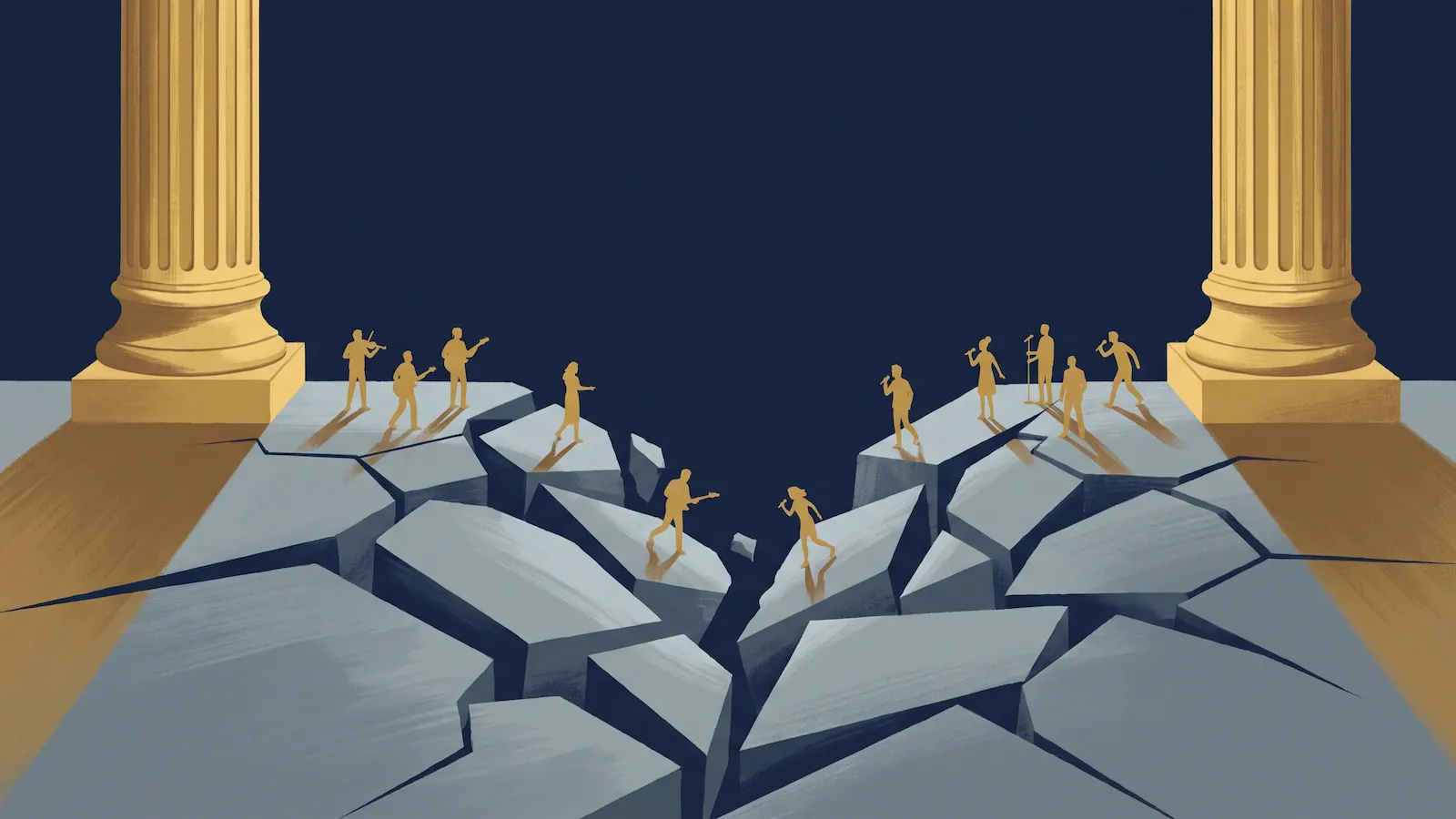
Before this was a publication, it was a research report. The Sovereign Blueprint — the strategic analysis that started everything you’re reading — opened with a claim that sounded dramatic in late 2025 and reads like a weather report today: the operational playbooks of the last decade are obsolete, and the global music economy is undergoing a structural reorganization that will not preserve the middle.
The Great Squeeze is that reorganization: the systematic hollowing-out of the music industry’s middle class — the careers built on third-party streaming dependence, traditional touring economics, and label-shaped financing — as the market aggressively bifurcates into two distinct economic poles that outcompete it.
On one pole sits the Hyper-Authentic economy: scarcity, raw human connection, and — the Blueprint’s exact phrase, a year before platforms made it policy — proof of humanity. This is the economy of the verified human performance, the premium live experience, the record whose value is precisely that a machine didn’t make it.
On the other pole sits the Hyper-Synthetic economy: infinite, near-zero-marginal-cost content, AI-scaled output, mood-optimized volume. Competent audio as a commodity, produced faster than any human middle-class career can price against.
The middle — the artist earning fractions of pennies on streams of music that’s better than the synthetic flood but not verifiably, premium-ly human; touring at break-even; waiting on label economics — is being squeezed by both poles simultaneously. The synthetic pole undercuts its price. The authentic pole outclasses its positioning. The Blueprint’s conclusion was entirely unsentimental: the middle is no longer a financially viable place to stand.
The year-one scorecard
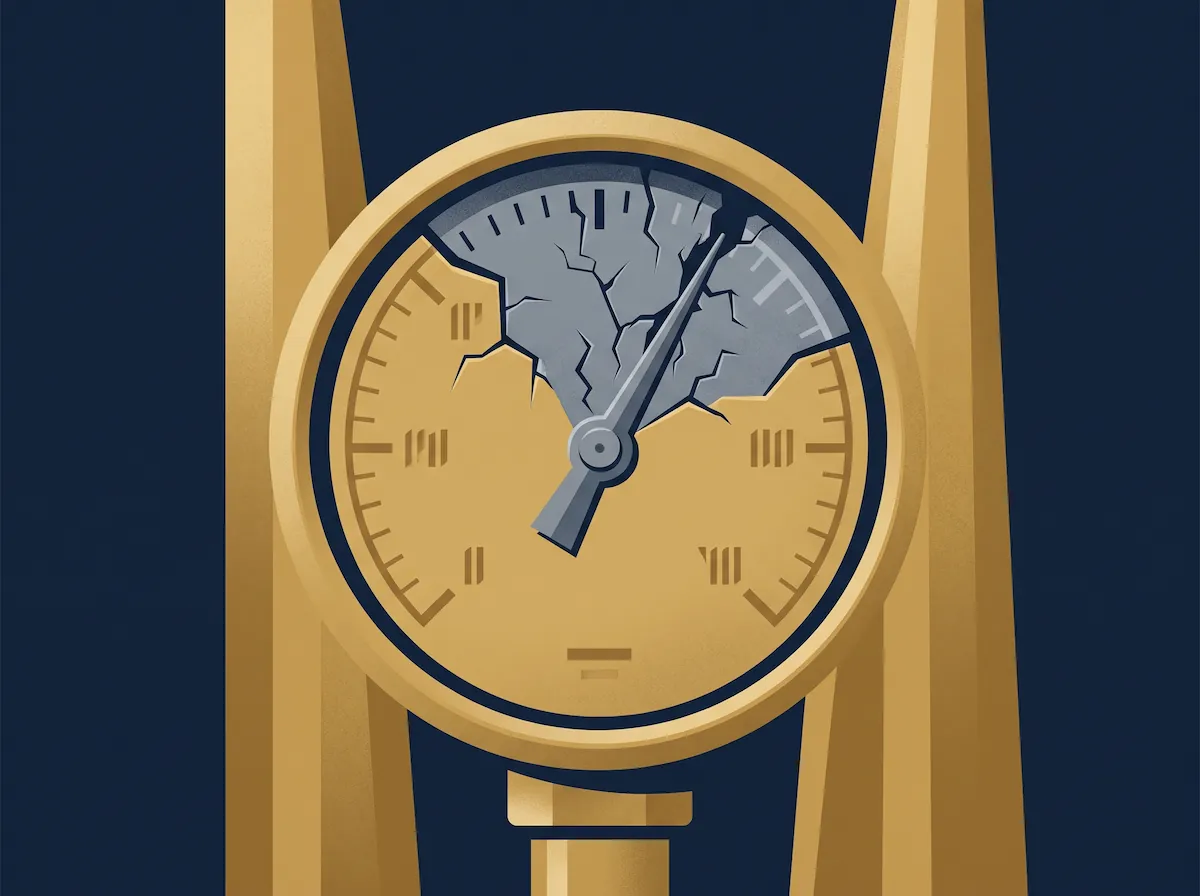
What makes the thesis worth republishing isn’t that it was bold — it’s that the infrastructure confirming it arrived within twelve months. Proof of humanity stopped being a metaphor: watermarking now fingerprints the synthetic pole’s entire output, EU disclosure law is enforceable, distributors interrogate AI use at the upload gate, and streaming platforms purge undisclosed generation by the tens of millions of tracks. Every one of those systems draws a harder line between the poles — and makes the unverified middle more suspect, not safer. The squeeze didn’t slow down. It got institutionalized.
Where this masthead stands
The Blueprint mapped both poles without moralizing, and this publication inherits that cold honesty — but a masthead has to plant a flag, so here is ours. The two poles are not equally available to a working producer. The Hyper-Synthetic empire is a volume game with a ceiling built in: its inventory is watermarked, largely unownable, and lives at the mercy of platform policy toward generated content. The durable position is the synthesis the Blueprint’s own analysis points toward — machine leverage in the process, verifiable human craft in the product. You must build with the synthetic pole’s speed, but sell from the authentic pole’s scarcity. In the vocabulary this publication has since built, that position has a name: the Bionic Virtuoso →.
The rest of this series walks the Blueprint’s map chapter by chapter — the one-person empire model, the psychology of what audiences will actually pay for, the majors’ legal chess game, the visual arms race, and the decade roadmap graded one year in. The middle is closing. The report told you where the exits are.