The Hall of Records · The Masters Editor's Pick
The Masters: Bear McCreary
Battlestar Galactica, God of War, The Rings of Power — and a record label he owns that releases all of it. The first Master in this Hall whose primary medium is interactive, and the clearest working example anywhere of a composer who kept his own catalog.

I. Why this profile exists
Every other composer in this Hall writes music for a fixed timeline. A film is 128 minutes long and will be 128 minutes long every time anyone watches it. Zimmer’s suites → get conformed to a locked edit. Williams’s leitmotifs → arrive when the picture says they arrive.
Bear McCreary writes for that world too — television and film, at the highest level. But his most significant work happens somewhere the rest of this Hall has never had to operate: inside a medium where the audience decides how long the scene lasts.
A player might clear a combat encounter in forty seconds or four minutes. They might stand still for ten minutes looking at a wall. They might die and restart the same fight eleven times. The music has to work in all of those cases, transition between them without seams, and still deliver an emotional arc that lands when the story does — which is a compositional problem no film composer in history had to solve, and which almost nobody outside games understands.
He also does something else that makes him uniquely relevant to this masthead: he owns the label that releases his music. Sparks & Shadows has published his soundtracks for a decade — a composer holding his own catalog in an industry where composers historically hold nothing.
Two reasons for the profile, then: the medium, and the ownership.
II. The record
Television. Battlestar Galactica — the score that made his name and remains among the most influential television scores ever written. The Walking Dead. Outlander. Black Sails. Agents of S.H.I.E.L.D. Da Vinci’s Demons. Foundation. Multiple Emmy Awards.
Games. God of War (2018) and God of War Ragnarök — BAFTA and DICE awards, a Grammy nomination, and a Game Awards win for music. He also appears in Ragnarök, performing as a hurdy-gurdy-playing dwarf named Ræb, which tells you something about how far inside those projects he works.
Film. 10 Cloverfield Lane, The Cloverfield Paradox, Godzilla: King of the Monsters, Child’s Play.
Prestige television at scale. The Lord of the Rings: The Rings of Power — symphonic orchestra, folk instruments from across Europe and North Africa, solo vocalists and choirs singing in Tolkien’s constructed languages, expanded in season two with Bulgarian women’s choir and gadulka for Rhûn, children’s choir for Eregion, Hardanger fiddle for a new character.
As an artist. The Singularity and its follow-up The Singularity: Ekleipsis — rock and metal records featuring guest vocalists and players, toured live in Europe and North America.
As a business. Sparks & Shadows, his own label — the release imprint for his soundtracks — which has grown into a collective of composers he mentors, whose members now score their own major projects including Percy Jackson and the Olympians and the Halo series.
III. The scoring problem nobody else in this Hall has
Interactive scoring is not film scoring with extra steps. It is a different discipline, and the differences are worth stating precisely because they are becoming everyone’s problem.
| The variable | Film / television | Interactive |
|---|---|---|
| Duration | Fixed. The scene is the scene. | Unknown. Forty seconds or forty minutes, decided by the player. |
| Order | Fixed. Scene 12 follows scene 11. | Variable. The player may do things in any order, or not at all. |
| Repetition | Watched a handful of times at most. | The same combat music may play hundreds of times. |
| Transitions | Composed. You write the moment one cue becomes another. | Systemic. The engine decides when to move, and it must never sound like a decision. |
| Emotional timing | You control it exactly. | You control the material; the player controls the timing. |
What that forces on the writing. Music must be built in layers and loops that can be added, removed, and re-entered at any point — so a piece is not a fixed object but a set of components with rules about how they combine. It must survive repetition without becoming irritating, which pushes toward material that is characterful but not fatiguing. And it must be able to escalate on cue and de-escalate without an obvious seam.
The trap this creates, and the reason the discipline is hard: the safest way to satisfy all of those constraints is to write texture — ambient beds, ostinatos, atmospheres that can loop forever without offending anyone. Enormous amounts of game music does exactly that, and it is completely forgettable.
What McCreary does instead is the profile’s central technical fact: he writes strong, memorable themes anyway — melodies you leave the game humming — and then engineers them to survive the systemic demands. That is substantially harder than either writing a good theme or writing a good loop, because it requires both simultaneously, and it is why the God of War music is discussed in a way most game scores are not.
How he actually solved it: the three-note motif
The God of War theme is the clearest documented example of the technique, and he has explained it himself.
The Kratos material is built down to a foundational three-note motif — a short ascending figure — deliberately engineered small enough to function as a recognition trigger. In his account, the point of reducing it that far is behavioral: consistent repetition of a tiny, unmistakable figure trains the player’s emotional memory, so that when the motif surfaces anywhere in the score — under combat, in a menu, at a story beat the player reached in their own time — it carries everything the player has previously associated with it.
Sit with why that solves the interactive problem specifically.
- A three-note figure survives repetition. Hundreds of hearings do not exhaust it the way an eight-bar melody would.
- It fits anywhere. Short enough to appear in a transition, a sting, a full orchestral statement, or a quiet moment, without needing a fixed amount of time to complete itself.
- It carries emotional continuity across a non-linear structure. The player controls the order and duration of everything; the motif is the one element guaranteed to recur, which makes it the thread the emotional arc hangs on.
- And it still functions as a theme. People leave the game able to hum three notes — which is the whole point, and the thing texture-based scoring cannot deliver.
The transferable version: if you need material that will repeat heavily — a brand identity, a series, a live set, anything a listener meets many times — build the smallest recognizable unit first, and let the larger material be constructed from it. Most producers write the big statement and then struggle to fragment it. The reverse order is more robust, and it is why this theme works in a medium that plays it hundreds of times.
IV. The method
1. Find the way in through the world. His stated approach to a project is to look for a historical, geographic, or cultural anchor and start there — a real tradition to build from rather than a generic score idiom. God of War’s Nordic setting brought Icelandic and Scandinavian instruments and language. Black Sails brought period and maritime music. The Rings of Power brought European and North African folk instruments and Tolkien’s languages. The score’s identity comes from the world’s specificity, not from the composer’s signature.
2. Themes for people, not moods. He is a thematic composer in an era that mostly abandoned themes for texture — writing identifiable melodies attached to characters and ideas, and developing them across seasons and sequels. This is the Williams tradition → operating in television and games, and it’s why viewers can hum his work.
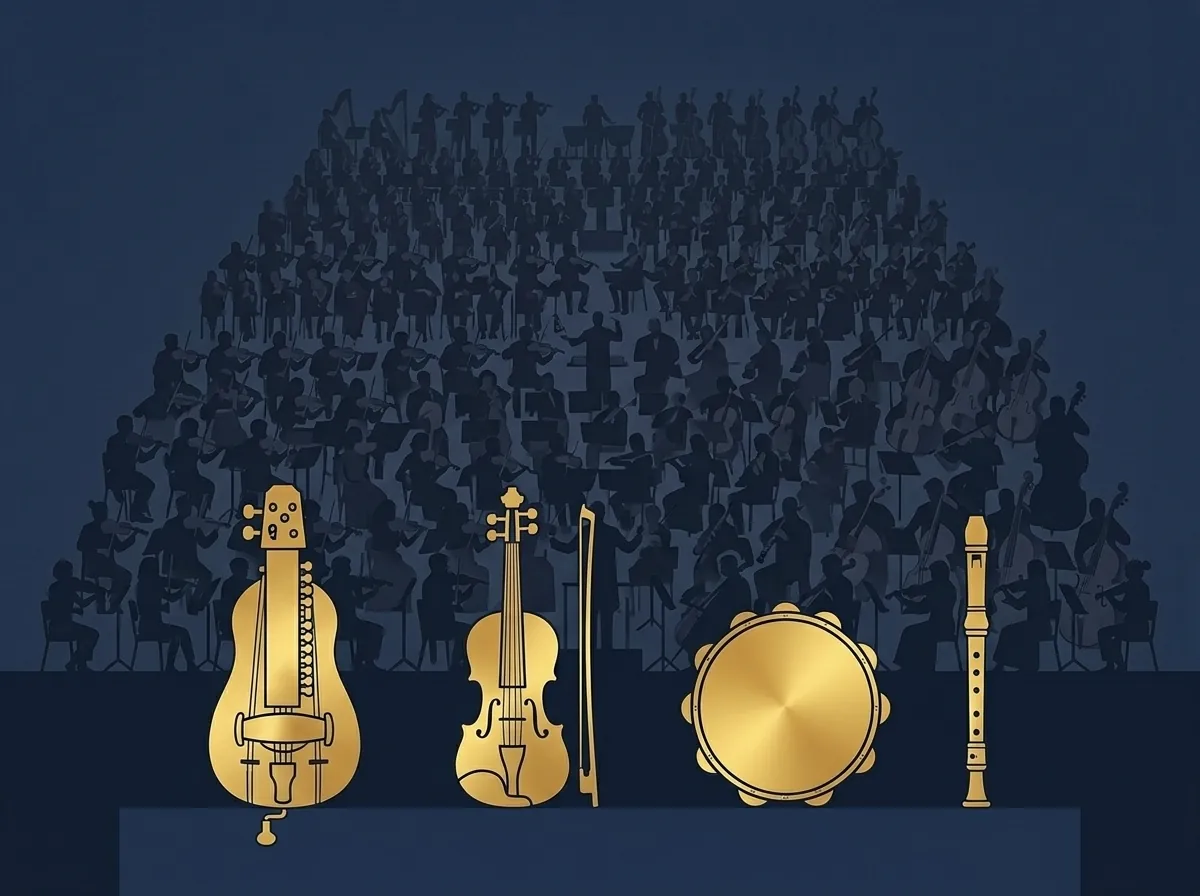
3. Real instruments, real players, unusual choices. Hurdy-gurdy, nyckelharpa, duduk, gadulka, Hardanger fiddle, taiko, Bulgarian choir. Not sampled approximations used as color — actual specialists playing actual instruments, chosen because a specific tradition belongs in a specific world.
4. Voice as an instrument, and language as a texture. Choirs singing in constructed and regional languages; solo vocalists as thematic voices. On The Rings of Power this is the score’s defining feature.
5. He plays. Accordion, hurdy-gurdy, keyboards, and performing on his own scores — a composer whose relationship to instruments is physical rather than curatorial.
What a working producer should steal: the anchor habit. Before writing anything for a project — a client’s record, a brand piece, your own EP — find a real tradition, place, or era to build the palette from, and let that generate the sonic decisions. It is the fastest known cure for material that sounds like everything else, and it costs an afternoon of listening rather than a purchase.
V. Sparks & Shadows: the composer who kept the catalog
Here is why this profile carries an Editor’s Pick on this masthead specifically.
Screen composers occupy one of the weaker ownership positions in music. Scores are frequently work-for-hire; the studio owns the recording, often the composition, and the composer receives a fee and whatever back-end their representation negotiated. Soundtrack releases, historically, happen if a label decides there’s a market — meaning the composer’s own catalog reaches the public at someone else’s discretion or not at all.
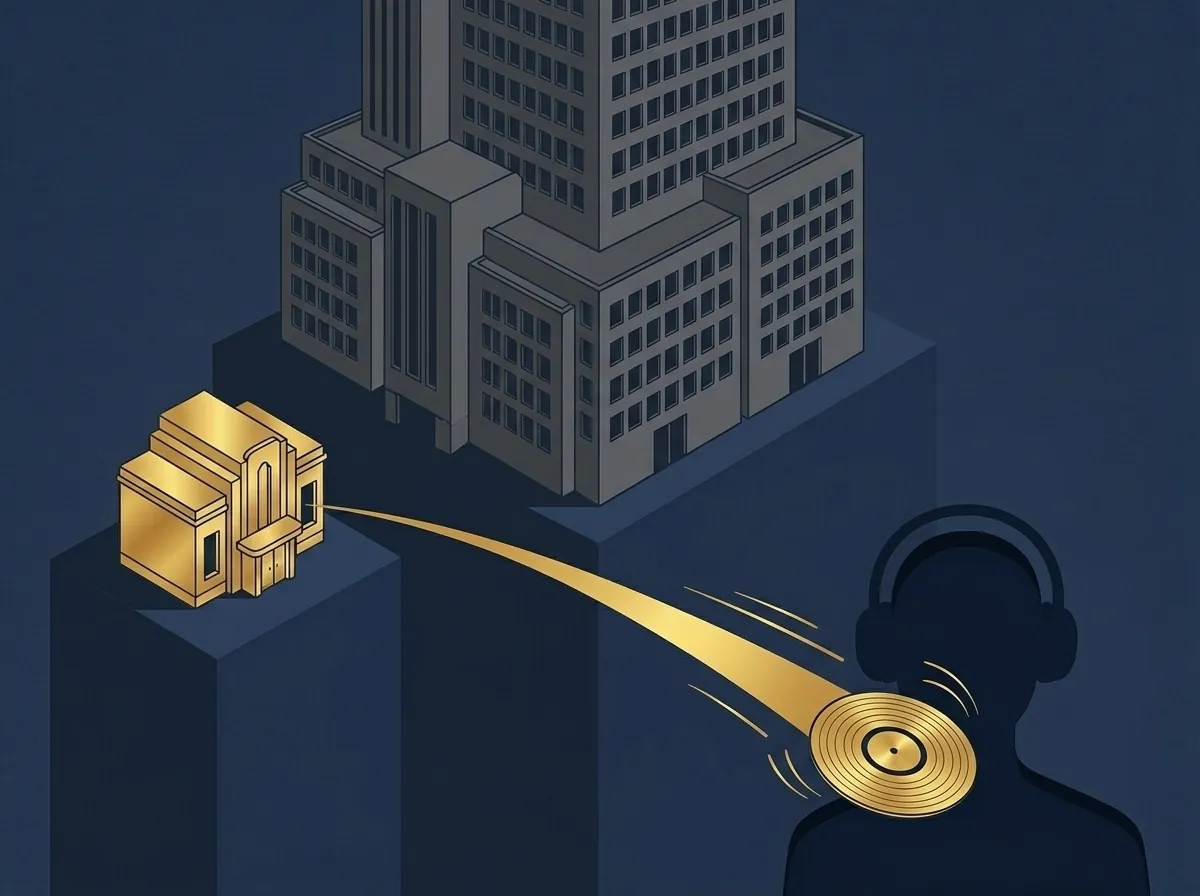
McCreary built the alternative. Sparks & Shadows is his own company — by its own description a full-service production studio, record label, and publishing entity, and the headquarters from which all his projects are developed. It has released his soundtracks for years — 10 Cloverfield Lane, The Cloverfield Paradox, the Rings of Power seasons, and a long catalog besides, sometimes in partnership with studio music arms and specialist soundtrack labels.
Three things that structure produces, all of which generalize.
1. The work reaches the audience regardless of anyone else’s appetite. A score gets released because he decides it should, not because a label modeled the demand. For a composer with a devoted audience — and television and game composers have unusually devoted audiences — that difference compounds across a career.
2. The relationship with the audience is direct. Physical releases, vinyl, the artist records, live performance of the scores. The audience belongs to him, not to a distributor — which is the direct-audience doctrine →, executed in a corner of the industry where nobody expects it.
3. The label became an institution. Sparks & Shadows is also the name of a composer collective — young artists handpicked and mentored by McCreary, whose scores appear in Foundation, Masters of the Universe: Revolution, and Percy Jackson and the Olympians. That’s the Remote Control pattern → at a different scale: the people who build rooms outlast the people who build reputations.
The transferable version, for a producer with no label and no collective: own the release path for the work you can. Bandcamp, direct distribution, your own store — the specific tool matters far less than the principle, which is that a catalog someone else decides whether to publish is a catalog you only partly own.
VI. The road
Born in 1979 and raised largely in Bellingham, Washington. The formative fact is a mentorship: he studied with Elmer Bernstein — the composer of The Magnificent Seven, To Kill a Mockingbird, Ghostbusters, and a hundred more — beginning as a teenager and continuing through his time at USC.
Sit with the lineage. Bernstein worked in the Golden Age studio system, at the end of a tradition that ran directly back to the founding of film music. McCreary now scores an interactive Norse epic in which the audience decides when the fight ends. One direct teaching relationship spans that entire distance, which is the strongest argument this Hall can make for mentorship: the transmissible part of the craft is not the technology, and it moves person to person.
The breakthrough was Battlestar Galactica — a science-fiction series where the obvious choice was synthetic, futuristic scoring, and where he did the opposite: taiko drums, duduk, Middle Eastern and Asian instruments, voices. The score is now widely regarded as one of the most influential in television history, and it made his career by being the least predictable available answer to the brief.
The pattern from there is consistent: television when television was considered the lesser medium, games when games were considered not to count, an owned label when composers didn’t have those, a rock record when film composers didn’t make those. He has repeatedly worked in the room nobody was watching, and been there first when it became the room everybody wanted.
VII. The honest counterpoint
1. The interactive discipline has a real cost, and it isn’t discussed enough. Writing music that must loop, layer, and transition systemically imposes constraints that a film composer never faces — and constraints shape material. Some of what makes the greatest film cues great is precisely their unrepeatability: a phrase that lands once, at one moment, and would be ruined by a second hearing. That option is largely unavailable in interactive work, and it is a genuine loss, not merely a different set of tools.
2. Thematic maximalism is a position, not a virtue. Writing strong, hummable themes for characters is one legitimate answer. The Reznor and Ross school → argues the opposite — that a score’s job may be to withhold, to sit under the threshold, to induce a state rather than announce a character. Both approaches have produced canonical work, and a producer should choose per project rather than by allegiance.
3. Owning the label is easier at his altitude than the lesson implies. A composer with Emmys, a devoted audience, and studio relationships can run a release imprint in a way a working composer with none of those cannot. The principle scales down; the leverage does not. The honest framing is that owning the release path is a decision available at every level and worth vastly more at the top — which means the time to build the habit is before it pays.
VIII. Currently
2026 — Released The Singularity: Ekleipsis, the follow-up to his 2023 rock album, with live dates across Europe and North America performing music from God of War, Battlestar Galactica, The Rings of Power, and the album.
2026 — Continuing screen work including new God of War and Outlander material; appeared at San Diego Comic-Con on musical worldbuilding.
Ongoing — Sparks & Shadows continues as both his release imprint and a collective of composers he mentors, whose members score major series independently.
Ongoing — On AI: he has said publicly that he is still waiting for the AI film or song that genuinely resonates with people, and hasn’t seen one yet — while explicitly acknowledging the gray area rather than dismissing the technology outright.
IX. The last thing
The Hall’s other composers wrote for an audience that sits still.
McCreary writes for one that moves — that decides how long the moment lasts, that replays the fight, that stands in a field looking at nothing for ten minutes while the music has to keep meaning something. And rather than solving that problem the safe way, with texture that loops forever and lands nowhere, he writes themes — melodies people leave the game humming — and then does the much harder engineering work of making them survive the medium.
That’s the craft lesson. The business lesson sits beside it and is, for this masthead’s readers, the more urgent one: he releases his own music. In a corner of the industry where the composer’s catalog is traditionally somebody else’s decision to publish, he built the imprint, kept the audience, and then turned the imprint into a place where the next generation gets to do the same.
Two careers’ worth of unfashionable choices — television before it was prestige, games before they counted, his own label before composers had one, a rock record when nobody asked for it. Every one of them looked like a detour at the time.
The rooms nobody is watching are the ones still available. That has never stopped being true.
Sources: PlayStation — “God of War | Dissecting the Theme” (~1:50), in which McCreary explains the theme’s construction · Den of Geek — Bear McCreary on God of War, AI, and The Rings of Power (July 2026) · Gamereactor — McCreary on dream projects, character themes, and his rock concert (2025) · Mutant — The Rings of Power season two original soundtrack, release notes documenting the season-two instrumentation · Sparks & Shadows — about the company and the composer collective, documenting the label, publishing entity, and mentee roster · Bear McCreary’s official biography and published soundtrack credits. Last verified 2026-08-11.