The Hall of Records × The Craft Desk · The Protocols Editor's Pick
The Protocols: The Suite-First Workflow
Hans Zimmer doesn't score to picture — he builds the world first, then conforms it. The counterintuitive workflow behind modern film music, and why it's the single most transferable professional habit on this desk.

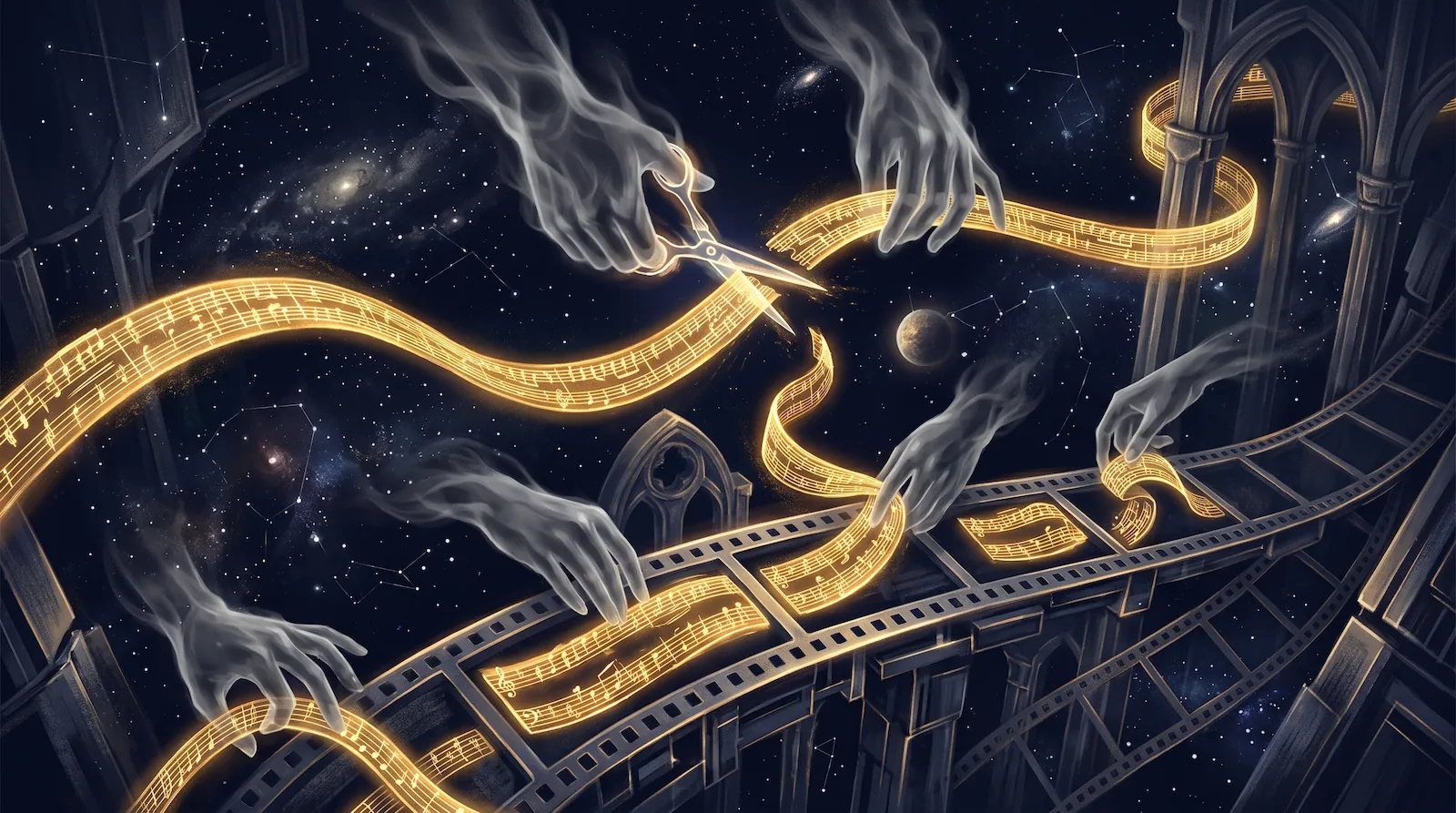
Here is a workflow that sounds backwards until you understand the problem it solves.
The obvious way to score a film is to watch the film and write music to it. And that is what most composers do — and what most of them suffer for, because early picture cuts change constantly. A scene loses four seconds; the phrase you built to land on a look now lands on a doorway; the measure lengths get rewritten, then rewritten again, and the music slowly stops being music and starts being carpet cut to fit a room that keeps moving.
The Zimmer school inverts it. Compose the world first, in long standalone thematic suites — before picture locks — then conform the finished material to the edit. Music written as music; picture served by assembly rather than by compromise. It’s the most transferable professional habit in the entire Hall, and it has nothing to do with orchestras.
The architecture, phase by phase
Phase one: build the palette before the material. Before a bar is written, the school builds instruments that don’t exist yet — sessions recorded specifically for this project, mapped into private sampled instruments with their own articulations, dynamics, and mic perspectives. The consequence is identity: the score cannot sound like anyone else’s, because nobody else has the instruments. The producer’s translation is exact and cheap: before starting a project, spend one session building the palette it will run on — your own drum hits, your own recorded textures, a handful of patches designed for this record and no other. You are not procrastinating; you are eliminating the sameness that makes most independent records interchangeable.
Phase two: the suite. Working from the script and concept art rather than picture, the composer writes a long, standalone piece — often twenty to thirty minutes — that explores the entire emotional territory: the main theme in full, the atmospheric beds that will live under dialogue, the antagonist material, the escalation, the climax. It’s not a demo. It’s the film’s musical DNA, composed at length and at leisure, with musical logic intact because no frame count is dictating phrase lengths yet.
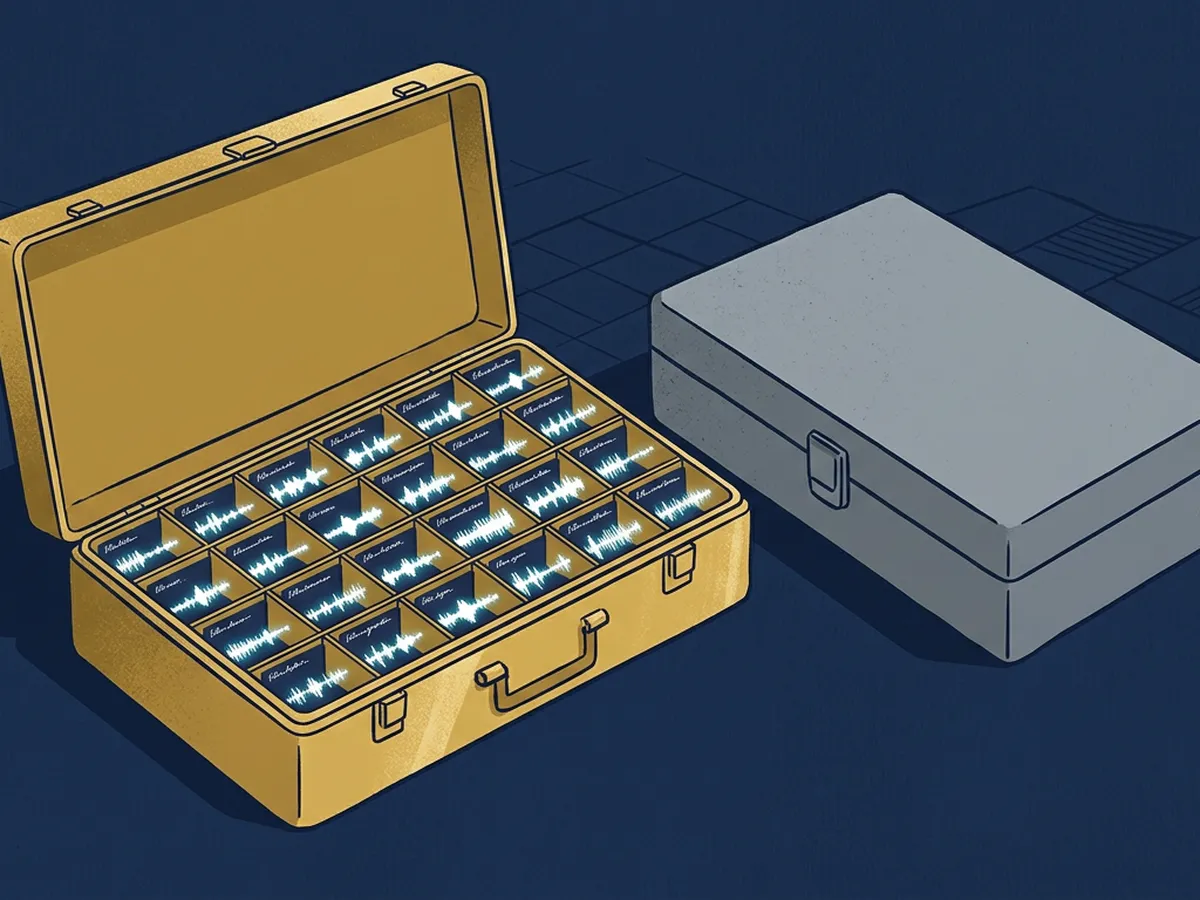
Phase three: stems, at absurd resolution. The finished suite is sub-mixed into a vast system of isolated stems — percussion split by register, strings by articulation, brass by cluster, synths, sound design, all separated. This phase looks like housekeeping and is the entire reason the workflow functions.
Phase four: conform. When picture edits arrive, music editors cut, stretch, loop, and rearrange those pre-mixed stems onto the timeline. A scene that got shorter doesn’t require re-orchestration — it requires assembly. The music never has to be re-written; it has to be re-arranged, from parts that already sound finished.
Why this is the most stealable workflow on the desk
Because every professional producer works under someone else’s revisions. The client wants the intro shorter. The artist wants the second verse to drop out. The sync supervisor needs a thirty-second cut and an instrumental by Friday. And most producers meet those requests by re-opening the creative work — which is where hours die and quality erodes.
The suite-first school meets them by assembly, and you get that capability from one habit: finish in stems, always. Bounce every element as a separate, mix-ready file at the moment the record is done — before the session goes cold. Then:
- The thirty-second edit is fifteen minutes, not an afternoon.
- The instrumental, the TV mix, the a cappella, the alternate arrangement — all already exist in parts.
- The client’s “can we try it without the pad?” costs one mute, not one session reopening.
- And the sync library that asks for stems — increasingly, all of them — gets them same-day, which is a real revenue difference →.
The deeper move for your own records: write the suite. Before an EP, spend a session composing a long piece that explores the whole project’s territory — themes, textures, transitions, moods — with no track boundaries and no arrangement obligations. Then build the songs by conforming that material. You’ll finish with a coherence across the project that sequencing alone can never produce, because the record will genuinely share a musical DNA rather than a mastering chain.
The honest counterpoint
This workflow front-loads cost, and the cost is real: building a palette and composing a suite before you’ve written a single deliverable feels like enormous work with nothing to show. On a fast, disposable, or low-budget job, that’s simply the wrong trade — sometimes the right move is to write the song and finish it. And there’s a genuine risk in the method: material composed away from picture can be too self-contained — beautiful music that never quite serves the scene, which is exactly the failure mode the direct-to-picture school avoids by construction.
The honest synthesis is per-project. Suite-first pays when the work is long, thematic, revision-heavy, or yours. Direct-to-picture pays when the work is short, reactive, and someone else’s. The one part that pays always — regardless of school, budget, or genre — is finishing in stems. That habit costs one afternoon of discipline and buys you a career of cheap revisions.
The Protocols: Max Martin’s Vocal Architecture → · Ducked Space → · The Hall: The Scoring Legends →