The Hall of Records · The Masters
The Masters: Flood
U2's reinvention, Depeche Mode's imperial run, Nine Inch Nails at its most corrosive, PJ Harvey at her rawest. The producer who treats the recording process itself as the instrument — and destruction as a legitimate technique.

The record
Mark Ellis — known universally as Flood — has a discography that reads like a map of every moment a major band decided to become something else. Violator and Songs of Faith and Devotion with Depeche Mode. Achtung Baby and Zooropa with U2. The Downward Spiral with Nine Inch Nails. Mellon Collie and the Infinite Sadness with the Smashing Pumpkins. Work with PJ Harvey, Nick Cave, New Order, Erasure, The Killers, Foals, and a long list of others.
Notice the pattern in that list, because it’s the whole profile: these are almost all records where an established artist deliberately broke their own formula — and Flood is the person they called to do it.
The method
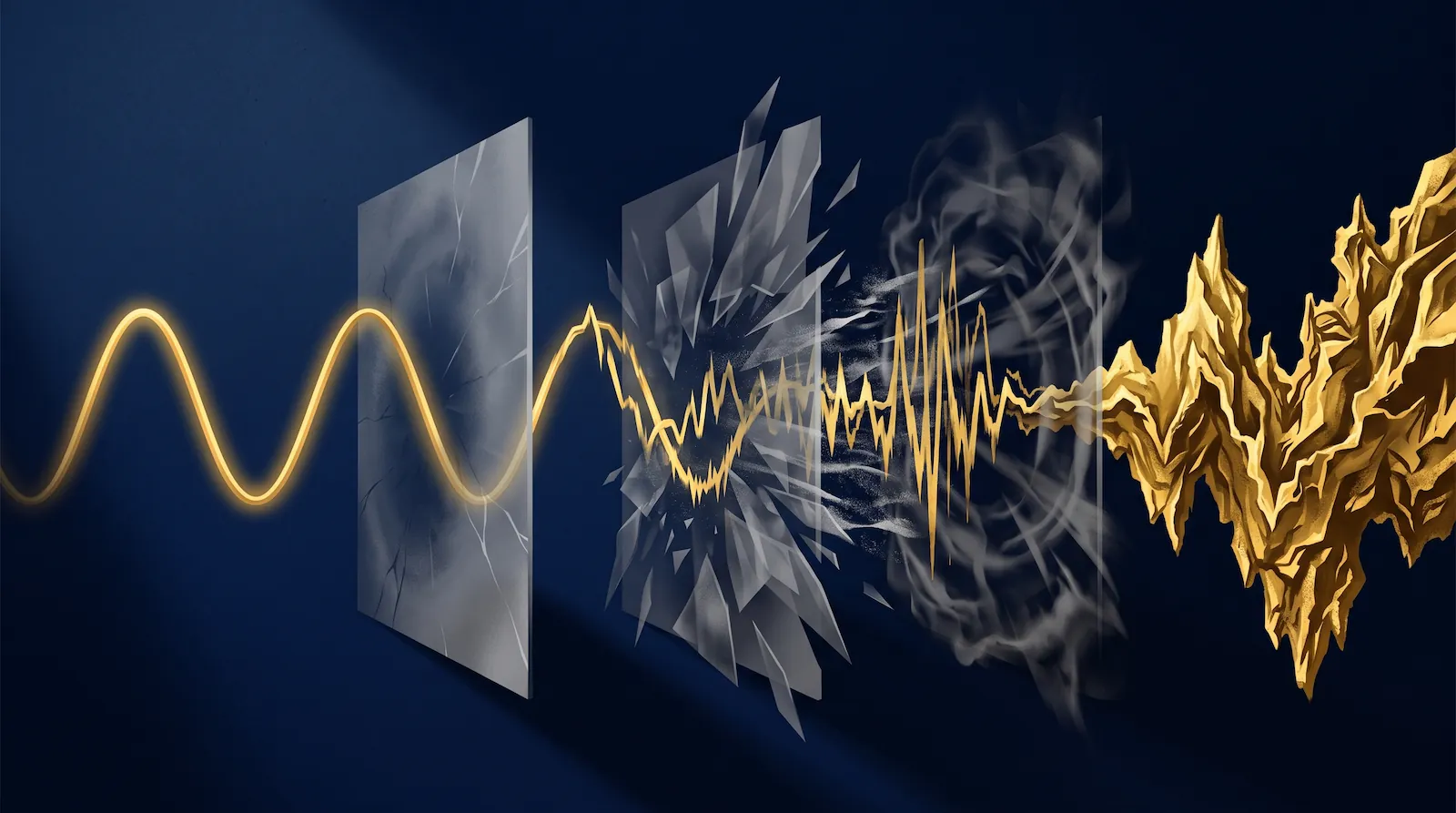
Process as the instrument. In the Flood school, the recording chain isn’t neutral capture — it’s where the sound is composed. Signals get pushed through amplifiers, degraded, re-amped, resampled, and abused until the artifact becomes the part. The distinction between “the performance” and “the production” collapses; what reaches tape is a thing that only exists because of how it was recorded.
Destruction as craft. A clean take is raw material, not a finished asset. The school’s characteristic move is to damage something deliberately — distortion, saturation, filtering, physical manipulation — until it stops sounding like a recording of an instrument and starts sounding like a decision. This requires the nerve to ruin a good take, which is a skill most producers never develop.
The producer as provocateur. Flood’s documented working reputation is for pushing bands out of their established comfort — changing instruments, changing roles, changing the plan mid-session — with the explicit goal of getting a performance the band didn’t know they had. The records above aren’t reinventions that happened to have a producer present; they’re reinventions the producer engineered socially before anything was engineered technically.
Speed against overthinking. Momentum is treated as a sonic quality: capture the idea while it’s alive, keep the version with the energy rather than the version with the accuracy. Over-refinement is understood as a specific way to lose a record.
The Flood production framework
| Production vector | The archival approach | The Flood method |
|---|---|---|
| The signal chain | Transparent capture of the room | Process as instrument — degrading, filtering, and abusing the signal to compose the sound |
| Take quality | Protecting the clean, pristine file | Destruction as craft — damaging a good take until it sounds like a decision |
| Artist psychology | Executing the band’s plan safely | The provocateur — moving artists out of comfort to reach performances they didn’t know they had |
| Pacing | Endless refinement | Momentum as a sonic quality — speed prevents overthinking; energy beats accuracy |
What a working producer should steal: duplicate the track before you wreck it, then wreck it without mercy. Most producers never hear what their material could become because they protect a clean take that was only ever a starting point. Save first, then destroy — and keep the retire-don’t-delete discipline → while you do it, so the archaeology of the decision survives.
The road
He came up the way the British studio system made producers before there were courses in it: as a tape op and assistant in late-1970s London studios — Morgan Studios among them — doing the unglamorous work in the corner of other people’s sessions for years before engineering, and then producing.
(The nickname is studio-floor lore from that era. The version that circulates has it earned as a runner, for the speed with which he kept the room supplied — a story told often enough to be part of the record, and sourced well enough to enjoy but not to state as fact.) That apprenticeship is the road, and it explains the method: a decade of watching what actually happens in rooms teaches which risks are survivable in a way no amount of theory can.
The road’s lesson for this desk is sharper than nostalgia for an apprenticeship system that no longer exists in that form. Flood’s authority came from volume of rooms — hundreds of sessions, thousands of decisions observed and made, long before anyone handed him a flagship record. The modern equivalent isn’t a tape-op job; it’s the number of records you actually finish. There’s no shortcut in either era, and the producers who look like they arrived fully formed are the ones whose apprenticeship happened where nobody was watching.
Currently
Recent — Still the engineer and producer of choice at alternative music’s working edge: PJ Harvey’s I Inside the Old Year Dying, and records with Shame (Food for Worms) and The Murder Capital.
(Further items in the desk’s research file are held pending verification, per the standing rule.)
The Hall of Records: The Pantheon → · The Masters: Butch Vig → · Rick Rubin → · Serban Ghenea →